How can we help?
Find answers to common questions about the AmeriCamp program.
Yes, you can share photos of your time at Camp to social media, but your Camp may have guidelines in place to protect the privacy of your campers that prohibits you from including them in these photos. We would recommend only posting photos with other staff or of the beautiful surroundings at Camp to maintain child privacy.
It is also important to not post inappropriate images of you at Camp or in Camp uniform, such as photos of you drinking alcohol, doing drugs, dressed immodestly or doing anything illegal, as this could lead to dismissal from Camp.
The majority of Camps will have designated spaces with access to the internet but it is unlikely that Wifi will be available across the entire property. If you are unable to access the internet on your own device and require this for any reason, Camp will have computers, usually in the main office, that may be accessible to staff during their time off.
If you want to use mobile data to connect to the internet, you need to check that your phone plan includes this. For more information about SIMs while at Camp click here.
In case of emergency, there will always be one or more other members of staff around who are able to find or contact members of Camp leadership, who will have radios or phones.
Camps are tightly controlled and you will not be put in a position where you are not able to access aid in an emergency, even if you do not have your phone on you.
Most Camps have strict phone policies in place to protect campers, but this does not mean you will never be able to use your phone.
Typical phone usage rules at Camp outline:
- You should not use your phone during work hours when you are around campers. Most Camps will prohibit phone use while supervising campers (with the only exception being to play music) to ensure their safety. At Camps with stricter phone policies, phones may need to be kept in a locker during your work hours.
- You can use your phone during breaks and time off, usually in staff areas or in your cabin when campers are not present or asleep.
- You should not take photos or videos of campers on your phone, for their protection, but can use a digital or disposable camera.
Although this can seem daunting, it is a great way to unplug and focus on having fun with your campers. If you are worried about keeping in touch with loved ones back home, you can always contact them during time off and days off.
Yes, at most Camps, you can leave Camp on your days off, but transport is not always provided. Some Camps will have mini-buses and other vehicles, offering day trips to local attractions. At those that cannot offer this, there will usually be domestic American staff with cars that can offer you transportation.
You must be conscious of returning to Camp within the right time frame and not outstaying any curfews. If there is no available transportation on a particular day off, you are permitted to stay on Camp and relax or get involved in activities you don’t usually get the chance to participate in.
On days off, staff often:
- Visit nearby towns or cities
- Go shopping or out to eat
- Spend the day at a lake, river or beach
- Hang out with their friends on or off Camp
- Catch up on sleep or errands such as laundry
Yes, you will definitely have some time off each day, although how much varies by Camp. Typically, you should expect to have at least one period during the day or evening, where you can relax, catch up on sleep, shower, spend time with friends or catch up with loved ones back home.
Typically at most overnight residential Camps you will have at least:
- One full day off a week (usually 24 hours), that may be the same day every week or could differ week to week.
- 1 - 3 evenings off a week, where you're free after lights out for a couple hours until curfew.
- Breaks during the day, that will vary depending on your role and your Camps schedule.
You may get more time off at some Camps, especially at Day Camps where children do not stay overnight and so do not require 24-hour supervision.
Most Camps can accommodate common dietary requirements if they're communicated in advance, including:
- Vegetarian and vegan
- Gluten-free
- Dairy-free
- Nut allergies
- Religious dietary requirements (such as kosher or halal, depending on the Camp)
This cannot be guaranteed at all Camps, so make sure to discuss your dietary requirements with Camps during the interview process.
Food at Camps will vary but is primarily intended to be kid-friendly and scalable to feed large groups efficiently. This usually consists of cafeteria-style meals consisting of:
- Breakfast: Toast, cereal, eggs, yogurt, fruit, bacon, sausage, pancakes, waffles etc.
- Lunch/Dinner: Burgers, tacos, pizza, pasta, soup, salad, meat and veg etc.
- Dessert: Cookies, pie, ice cream, cake etc.
Most Camps will also have a salad bar to supplement the meal with a range of fruit, vegetables and salads.
Most Camps host meals in a large dining hall, where food is served either:
- Buffet-style: campers and staff go to a buffet to select the food they want
- Or family-style: food is placed on each table and served out to each person
Yes, most Camps have a dress code, but not all Camps have a set uniform. Dress codes are usually practical rather than formal and common expectations include:
- Comfortable clothing: T-shirts, shorts and athletic wear that are comfortable and modest.
- Closed-toe shoes: Required for personal safety (sandals or flip-flops may only be allowed at the pool, waterfront or in showers).
- One-piece swimsuits: Worn only at the pool or waterfront, bikinis are usually prohibited.
- Camp-appropriate: Clothes should not have offensive or inappropriate language or imagery, such as graphics that promote drugs, alcohol, or violence.
At Camps that do require a uniform, this will usually consist of branded t-shirt’s or polo shirts provided by Camp and potentially a set colour for shorts and trousers.
Camps hire domestic staff from the US, many of whom were campers themselves, as well as staff from around the world. You could be working with people from just about anywhere, but most commonly the UK, Ireland, Australia, New Zealand, South Africa, Mexico, and other European or South American countries.
Typically staff will be between 18–28 years old, but there will likely be some senior staff, nurses, Camp directors or maintenance staff who are older than this.
Every Camp will run activities in their own unique way, but the end goal will always be to provide campers with a great experience where they are learning new skills and having fun!
Activities are usually split into about 5 periods throughout the day, generally lasting 45–90 minutes. Campers tend to choose their electives (the activities they want to participate in) individually or as a cabin group at the start of a week or session.
Campers will be taken from activity to activity during the day. You may travel with them to different areas and take part, stay in one activity area and teach different age groups throughout the day, or teach a range of activities across Camp - it depends on your role and the way schedules are structured at your Camp.
During an activity period you will usually help set up the area, give campers instructions, complete a game, task or practice and support campers in clearing up equipment, leaving the activity area ready for the next group. For example, an archery session might begin with a runthrough of range safety, followed by instruction on the goals for the day, then target practice, and end with collecting and storing equipment.
As a Camp Counsellor, you'll wear many different hats, as a coach, mentor, leader and role model. When you are with your campers, you are responsible for their safety, supervision, and support. This is why counsellors need to be mature, dependable, and able to work well with children and other staff.
In addition to your daily duties of running activities, planning and executing Camp events or general Camper care, the core responsibilities of a Camp Counsellors role are:
- Camper Safety and Wellbeing: Whether you're leading or supervising activities, sitting with your campers at meals or spending time in the cabin, you need to remain attentive and respond quickly and appropriately to situations that arise.
- Being a Positive Role Model: Children learn quickly from their role models so your attitude, behaviour and the way you treat others is incredibly important. Demonstrating kindness, respect and enthusiasm helps create a positive Camp environment and promote positive behaviour.
- Managing Behaviour and Providing Emotional Support: Children come to Camp to have fun, but there will occasionally be behavioural challenges. You may need to remind campers of Camp rules, encourage positive behaviour, help resolve conflict or support children who are homesick or dysregulated.
- Child Safeguarding: It is also your responsibility to ensure the protection of the children in your care from abuse. This involves looking out for changes in behaviour and signs of abuse among your campers and reporting these according to the safeguarding procedures at your Camp.
Your day to day life at Camp will vary depending on where you are placed and your role, but for a general idea of what to expect you can check out the Day in the Life at Camp page on our website.
The majority of Camps have designated laundry facilities but the way these are used varies from Camp to Camp. At some larger, more affluent Camps there will be designated custodial staff that will do the laundry for both campers and staff. Whereas, at other Camps it may be your responsibility to do your own laundry, which you can do by using the laundry facilities available during your time off.
Facilities will vary from Camp to Camp, but most Camps will have details of their facilities or even a Camp Map or Virtual Tour on their website - check this out before you head out to Camp so you know what to expect.
In general, these are some of the facilities you can expect to see at a traditional Camp:
- Activity Areas: Most Camps have a range of dedicated activity spaces, depending on what activities they offer. This could include sports fields or courts, arts and crafts studios, theatres, climbing walls and high ropes courses, archery ranges, nature trails and outdoor education areas, horse riding stables, and so on.
- Dining Hall: Used during meal times, these usually contain large tables where campers and staff eat together.
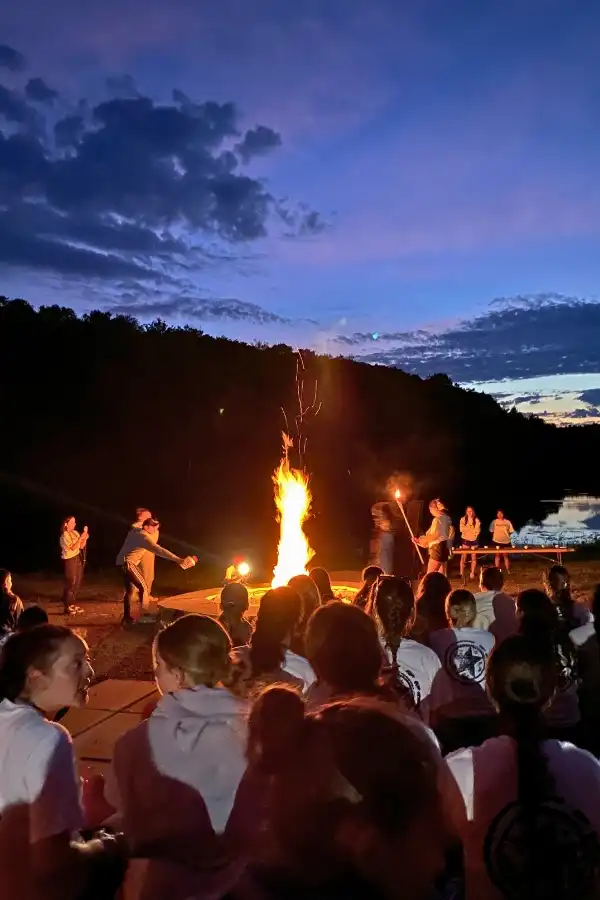
- Other event spaces such as Amphitheatres, campfires or Rec Halls: Used for large scale Camp events and performances.
- Infirmary or Medical Center: These are staffed by nurses who are there to help campers or staff with injuries or illnesses. This is also where any prescription medication will be held and administered.
- Bathroom facilities: At Camps that have centralised bathhouses with communal toilets and showers shared between multiple cabins.
- Boathouses or Lifeguard staff areas: At Camps that have a pool or lakefront. This is where all safety equipment and waterfront activity equipment will be stored.
You might also find:
- Laundry rooms that are accessible to staff
- Staff lounges or common rooms
- Administrative offices
- Maintenance buildings
- Leadership staff housing
Some Camp will have air conditioning in their accommodation, while others will not. It is likely that there will be at least one indoor space with air conditioning at Camp for when staff or campers overheat - whether this is in a medical center, office or dining hall.
In most roles at Camp, you will be sharing bathrooms with both campers and counsellors. Some Camps will have larger cabins with in-house bathroom and shower units that you share with your cabin group, while other Camps will have centralised bathhouses with communal toilets and showers shared between multiple cabins. These will always be separated into boys and girls sides.
At most overnight Camps you will be living with between 5 - 15 campers within a certain age group, as well as 1 - 5 other members of staff who support you in caring for your Camper group. These campers and counsellors will be separated into boys and girls sides of Camps that are co-ed. Campers and counsellors can be from all across the world and will share their unique culture with the cabin group.
In most roles at overnight Camps, you will be expected to live with your campers. The only exceptions to this are if you are at a Day Camp where the children do not stay overnight or if you are in a specialised or leadership position where you may be in staff-only housing.
Don’t let this put you off, as living with your campers is part of the fun of Camp. This is how you form incredible bonds with the children in your care.
Your accommodation will depend on the Camp, but will usually be a cabin or standing tent housing between 10 - 15 campers and counsellors. Living arrangements are usually quite basic and communal, but are designed to build a sense of community.
The most common accommodation types are:
- Cabins: These are wooden structures that contain several beds or bunk beds. Some Camps will have larger cabins with in-house bathroom and shower units, while other Camps will have a centralised bathhouse with communal toilets and showers shared between multiple cabins.
- Standing tents: This type of tent can vary but usually consists of a wooden platform with a thick sheet or tarp draped over it. These usually contain several bunk beds.
- Dormitories or lodges: Most Day Camps will have dorm-style accommodation for all international staff, since the children will not stay overnight. These will have shared bedrooms and communal bathrooms.
In your Camp accommodation, you should expect:
- Limited personal storage (a wardrobe, shelves, or space under your bed)
- Electricity, but usually limited Wi-Fi or mobile signal
- Some Camps will have air conditioning while others will not
It's quite common to have difficulty adjusting to Camp life at first. After all, you're adapting to a new environment, new challenges, long working hours, and meeting lots of new people. The most important thing is to give yourself time - the first couple of weeks are an adjustment period and you may just need some time to settle in.
If you are struggling to adapt to Camp life, here are a few things you can do:
- Talk to someone at Camp, like a returning counselor, unit leader, or Camp director, who understands what you’re going through. They will be able to provide you support in adjusting to Camp.
- Stay connected with home. A quick call or message to family and friends will help you gain a sense of normality and comfort.
- Get stuck in with Camp routines and activities. Join in with staff games and activities and spend time with your peers on your time off.
- Take care of yourself physically. Camp can be exhausting and physically demanding so getting enough sleep, drinking plenty of water and eating regularly can make a noticeable difference to your mood.
- As a last resort, if you are really struggling you can contact our US team and they will be happy to help you over the phone. They are available from 9AM - 5PM Eastern Time, Monday - Friday, to field any questions or concerns.
If you're feeling homesick, remember it doesn't mean you've made the wrong decision. You will probably find there are many international staff also adapting to the same changes. Talking with them can remind you that you're not alone and you are there to have the summer of a lifetime!
Of course! One of the main reasons participants return to Camp year on year is the amazing friendships they form. You may even be surprised by how quickly you bond with other staff, as you will all be thrown into the deep end together. It may take a little time to find your feet, but soon enough you will have built a community of fellow counsellors who can support you through your summer.
If you are worried about making friends, these are a few things you can do to help:
- At meals during staff training, try sitting with different people each time to get to know as many people as possible.
- Join in with staff activities and Camp traditions.
- Be curious - ask people about where they're from, what they do at home and what their interests are.
- Give it time - you may get the opportunity to work with someone new several weeks into the summer who you end up forming a close bond with.
Experiencing culture shock is totally normal at Camp. Not only will you be in a different country, but Camp will be a completely unique and new environment. Don’t beat yourself up if you do find it difficult to settle in at first, we always recommend giving yourself some time to adjust.
To give you an idea of what to expect, some of the differences you may notice include:
- Communication styles: You may find that American staff, and staff from countries around the world, may have different communication styles to you. Don’t assume that someone is being rude or unfriendly simply because their communication style is different from what you're used to. Likewise, be open to feedback if someone misunderstands your communication style.
- Tipping culture: If you spend time away from Camp, you'll notice that tipping is an important part of dining in the US. In many restaurants, a 20% tip is considered standard.
- Patriotism: Many Camps begin each day with a flag-raising ceremony and Pledge of Allegiance. This can feel strange at first, but soon becomes a normal part of your daily routine. These ceremonies are an important tradition at Camp and should be treated respectfully, even if you are not obliged to participate as an international staff member.
- Camp Traditions: Many Camps are rich in traditions that have been passed down through generations of campers and staff. Returning staff will often know these traditions inside out, while to first-time counsellors they may seem a little unusual at first. Whether it's singing at meals, campfire rituals, or special ceremonies or chants, every tradition helps to build Camp spirit. It's completely normal if these traditions feel outside of your comfort zone initially, but try to approach them with an open mind and a willingness to join in.
Camp will usually plan a specific time during the staff training period for new international staff to attend a Social Security office to be issued Social Security Numbers (SSN), but it is ultimately your responsibility to make sure this is completed.
At the Social Security office you will need to bring any documentation required at the US Border including your passport and DS-2019. You will be issued a SSN that will remain the same for life. It is essential that you keep this number safe, as it may be difficult to retrieve and is required for tax purposes or to apply for additional US Visas in the future.
If you are a returning applicant who has forgotten their SSN please refer to our Returner Section.
A Social Security number (or SSN) is a nine-digit identification number issued by the US government to all citizens, permanent residents, and temporary working residents to track their earnings and tax - much like a National Insurance Number in the UK.
It is mandatory that all participants are issued a SSN in order to be paid legally in the US, as your Camp employers will use your SSN to report your earnings to the IRS for tax purposes. You will not be able to be paid, pay tax or apply for additional Visas for employment or study in the US without a SSN.
Every Camp will provide training to their staff upon arrival to help you feel fully equipped for the summer. The contents of the training will vary Camp to Camp but will most likely include a First Aid course, information about the Camps rules, regulations and safety measures, and you may even have the opportunity to learn a new skill such as lifeguarding or high ropes.
During your 1 - 2 week staff training period, you will be expected to fully engage with the training and will potentially be required to do some Camp beautification or manual labour such as moving beds, cleaning up Camp facilities or setting up your activity area. It can be physically demanding but this will also be a great opportunity to bond with the other staff you are working with.
During this time, you will also be assigned to the age group you will be living with, as well as to co-counsellors you are living with. Co-counsellors are the other members of staff that also live in the same cabin/tent as you, and who you will work in a team with to care for your campers.
Upon arrival you will be required to “Check-In” on your Matchio portal to validate your Visa. This lets AmeriCamp, as your Visa Sponsor, know that you have arrived at Camp safely and confirm that you are not missing. If you do not Check-in upon arrival we will be prompted to contact your Camp and the appropriate authorities about your whereabouts.
Checking-in also activates your Medical Insurance and allows us to generate your insurance card. This can then be issued to you within a couple days of check-in so that you have it if needed in a medical emergency.
It is the responsibility of your Camp to organise your transport from the airport to Camp and they should communicate the plans for this to you ahead of your departure.
Upon arrival at Camp you will be assigned a bed, that is usually temporary until you get assigned to your specific age group. You will be given time to settle in and get to know the other staff you are staying with, usually at a dinner, social event or campfire.
You should expect to get stuck in with Camp training and activities as soon as you arrive. Don’t be shy, get involved and try to get to know as many people as possible, soon enough you will feel settled!
The I-94 is a digital record of when you enter and leave the USA. If you arrive by plane, the airline will complete this on your behalf. You can retrieve your I-94 record here.
If you are denied entry at the US border, please contact our US emergency line ASAP on +1-888-433-5594.
The immigration officer may ask you a number of questions, but stay calm, answer honestly, and you will be fine! Here are a few examples:
- Where is your Camp?
- What job will you be doing?
- Have you been to the US before?
- When are you planning to stay in the US until?
- How are you getting to your Camp?
AmeriCamp will provide a breakdown of what documents are required at the border at your AmeriCamp Orientation. A comprehensive list of all documents you should travel with can be found below:
- Your in date passport with Visa printed inside
- DS-2019 (Printed and signed at the Embassy)
- SEVIS Receipt
- Proof of return
- Camp Contract
- US point of contact information (Camp address and phone number)
- DBS Certificate/Criminal Background Check
- Medical Evaluation Form
- Insurance Documentation
All of the above should be printed and in your hand luggage to present after you get off of your flight. We would always recommend having digital copies available on your phone as well.
It is the responsibility of your Camp to organise your transport from the airport to Camp and they should communicate the plans for this to you ahead of your departure.
The majority of Camps will organise a bus or taxi service to collect you at the airport they instruct you to arrive at. You will most likely be travelling with a group of staff from your Camp, often from around the world, who have arrived at the airport on the same date as yourself. If you are asked to travel to Camp by public transport, they will provide detailed instructions on how to do this.
No, you do not need to book a return flight before you leave. Many of our applicants book this while at Camp so they can finalise their Post-Camp travel plans with the friends they make over the summer. You just need to make sure you are booking a flight within your 30 day grace period as you must not stay in the US beyond this.
We recommend waiting to book your flights until you have obtained your Visa, in case of Visa denial.
We recommend using a flight comparison website like Skyscanner or Google flights to find the best price. You will be told by your Camp which airport to arrive at, on which date, so you know what to book.
We allow all of our applicants to book their own flights independently so they can find the best time, price and airline that works for them. If we were to include flights in the price we would have to charge an estimated cost (that may work out more expensive in the end than you could book your own flights for) and take part of that cost off of your salary. To retain a high minimum salary of $2250 we do not offer a flight package.
Not necessarily! Always check with your current provider, as they may already provide you with included roaming. If they don’t, we would recommend purchasing a US eSIM of some kind, as having data when you first land in the US is extremely useful. Mint Mobile often runs a summer promotion, which includes a US number and unlimited data for $15 a month.
No, you should take at least one physical bank card with you to the US as some places, such as Walmart, don’t accept contactless payments. Make sure you check whether your card charges you fees to use it abroad. If it does, look into a specialist travel card such as Monzo, Revolut or Starling. Having some cash is also recommended, as some rural areas might also not accept cards.
We recommend bringing $300 - $500 split between card and cash, to cover any initial expenses you might incur when you land in the US e.g. toiletries, towels, items to make spruce up your cabin.
Whilst you are at Camp, everything such as food and accommodation will be provided, so you will only need a bit of money to pay for occasional things on days off.
The frequency of payments depends on your Camp, so please ensure that you verify this with your Camp prior to departure. To give you an idea of what to expect, some Camps pay you on a weekly or fortnightly basis, and others will pay you a lump sum at the end of the summer.